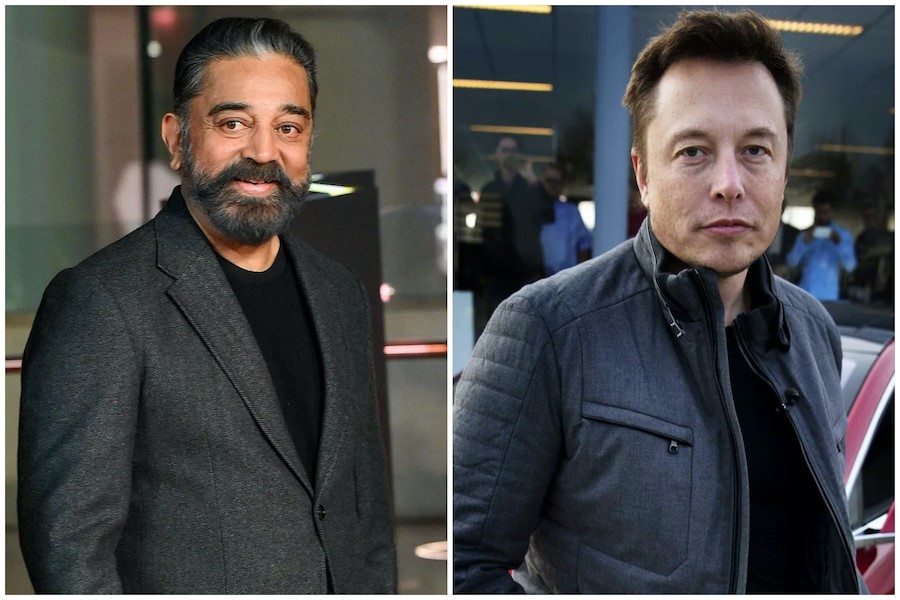
Kamal emphasised that India should welcome satellite internet providers from across the world, provided they offer practical and affordable connectivity, especially to people in remote regions. He warned that expensive subscriptions and equipment could make satellite internet inaccessible to ordinary households, particularly in countries where per-capita incomes are lower. For him, expanding connectivity should help bridge the digital divide rather than create another barrier for people who already face limited access to reliable internet services.
In his post, Kamal also underscored the strategic importance of telecommunications infrastructure and spectrum, arguing that commercial considerations cannot override national security. He drew a comparison between India's efforts to protect domestic manufacturers and the United States imposing tariffs on Chinese electric vehicles. He also referred to restrictions on Huawei in both countries, arguing that governments must be able to make decisions based on their own interests rather than accept demands for a level playing field only when it suits powerful international players.
Sharing his complete statement, Kamal Haasan wrote: “Mr. Musk, yes, no billionaire should dictate a nation’s policy - Indian or American. India must welcome competition in satellite internet, from Indian and global providers, whoever offers the most practical and affordable last-mile solution for those in remote regions. In countries with lower per-capita incomes, satellite internet must be affordable too. High subscription fees and equipment costs risk putting it beyond the reach of ordinary households. Connectivity must bridge the digital divide, not create a new one.
India knows our networks and spectrum are strategic infrastructure, not merely commercial assets. India’s national security safeguards are non-negotiable.
Every country makes choices based on its own interests. Those in the West cannot preach free markets while practicing protectionism at home. USA imposed 100% tariffs on Chinese EVs to protect its domestic industry, just as India takes measures to protect its own domestic manufacturers. Both India and the US have restricted Huawei over security concerns. One cannot demand a level playing field from others only when it suits its own agenda.
Indians will internally debate, question and address our strengths and shortcomings as a democratic country.
Take BharatNet, India’s programme to bring broadband to village-level local bodies. We will question why, as the CAG’s 2026 audit report found, the programme is struggling to meet its original objectives. Why were only 33.2% of service-ready Gram Panchayats operational, despite ₹39,888 crore being spent? At the same time, we know to appreciate our telecom sector and regulations, which has made internet data among the world’s most affordable, bringing millions online.
India is a democracy, not a colony. We welcome the world, but we, the Indian people, will decide our own future - not Western vested interests, their double standards or any billionaire - Indian or American.
A significant part of Kamal’s argument centres on BharatNet, the government programme intended to extend broadband connectivity to village-level local bodies. Referring to the figures in the CAG’s 2026 audit report, he questioned why only 33.2% of service-ready Gram Panchayats were operational despite expenditure of ₹39,888 crore. His remarks highlight the need for accountability in domestic infrastructure projects, even as he acknowledged the achievements of India’s telecommunications sector in making internet data affordable for millions.
By raising both the challenges and the progress, Kamal made a distinction between welcoming international investment and allowing outside interests to influence national policy. His position is that India can encourage competition, invite global businesses and improve access to technology without compromising its regulatory independence. He also maintained that criticism and debate within India are part of a functioning democracy, and that the country’s shortcomings should be addressed through its own democratic processes.
On the professional front, Kamal Haasan is preparing for Indian 3, continuing his association with director S. Shankar and the popular film franchise. Known for taking on a wide range of roles across Indian cinema, the actor remains active in both entertainment and public life. His latest remarks have brought the focus back to the intersection of technology, business interests and national sovereignty, with his central message being that India should remain open to the world while retaining the freedom to determine its own future.
News Helpline is a Brand in the world of daily Bollywood Content. We are a team of Innovative, Hard working and Creative people working in media since last 15 years. We were the first to sense the changing phase of News Industry with the progress of IT industry. Hence in the year 2008 we came up with a first of its kind Bollywood News Application, a website where we uploaded Bollywood news on daily basis and our client could download this news from anywhere in the world on the same day of the event. Then with the passage of time we improved and evolved. The result is today our client in any area of the world receives their Bollywood news (HD quality) within 2-3 hrs. post event. The value of News is very Time dependent and we at News Helpline deliver the News before thay become rumors.
This website uses cookies.


